
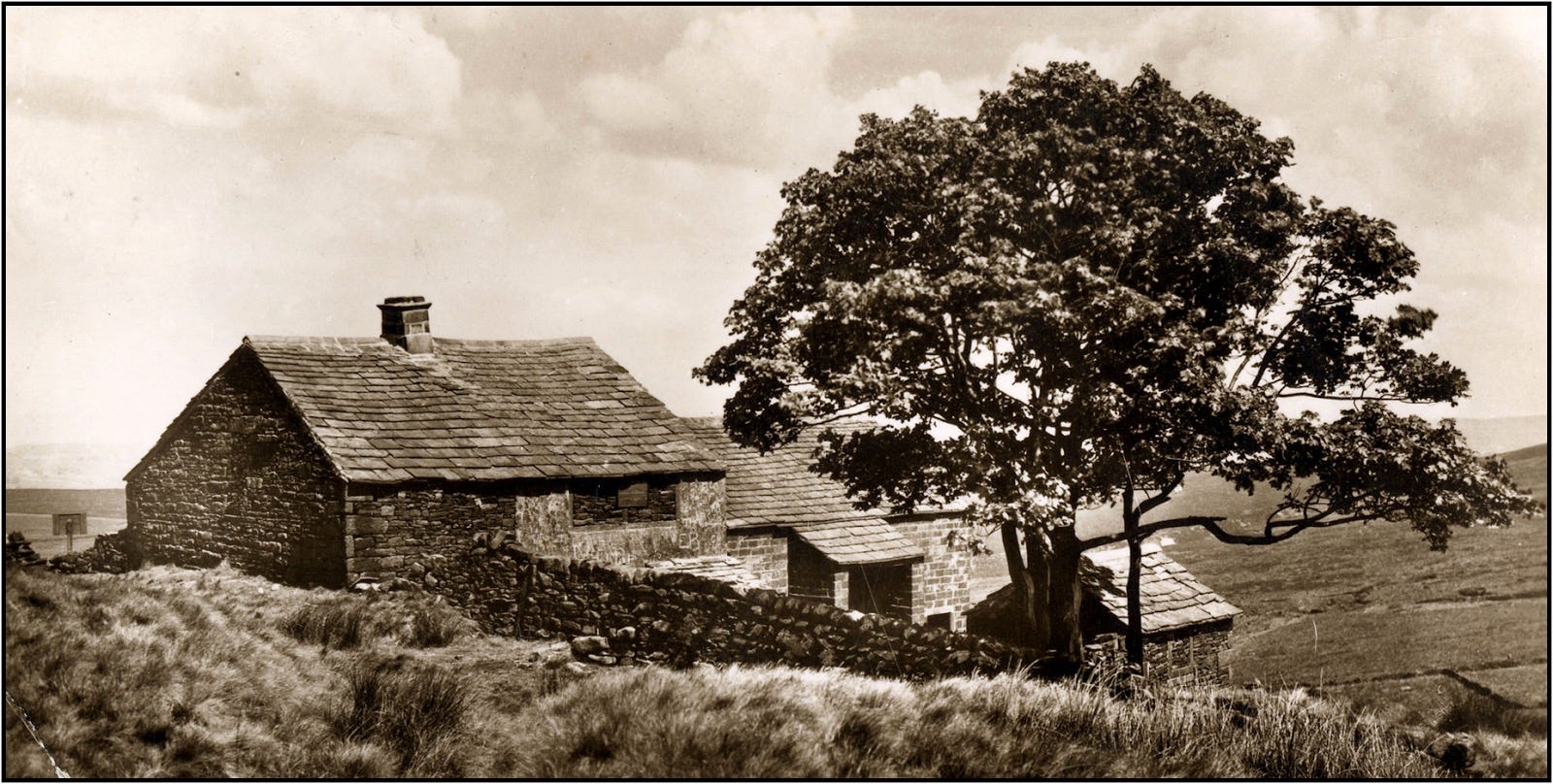
Feral Twins on the Moor
On reading Wuthering Heights
Emily Brontë’s Wuthering Heights is often described as a great tragic love story, yet I found it to be something far colder and more unsettling. It is not a romance in any conventional sense. There is no character to admire, no moral centre to steady the reader, and little opportunity to invest in the early innocence of Catherine and Heathcliff before their bond curdles into obsession. What the novel offers instead is a relentless study of destructive temperament and emotional brutality.
The reader hears that Catherine and Heathcliff once ran free across the moors like feral twins, but these formative years are largely summarised rather than dramatized. Because we are not permitted to dwell in their innocence, their later degeneration feels less tragic than abstract. Tragedy requires something luminous to be lost; here, the light is mostly reported, not shown. Without witnessing their early tenderness in depth, it is difficult to mourn its destruction.
Heathcliff presents a psychological puzzle that even modern psychiatry might struggle to categorize. Is he the product of abuse and humiliation, or does he possess a temperament resistant to transformation from the start? The novel leans toward fatalism: even had his adoptive father been uniformly kind, Heathcliff’s brooding ferocity seems less acquired than revealed. He does not evolve; he calcifies. In this sense, Brontë anticipates modern debates about nature and nurture, yet offers no redemption through environment or love.
The entire history of these characters is filtered through Nelly Dean, whose judgments and partialities are difficult to ignore. Catherine’s apparent ease in choosing Edgar Linton over Heathcliff remains psychologically opaque. How does one abandon a soul-twin so decisively? Nelly’s moralizing tone suggests that we are not receiving an objective chronicle but a domesticated version of events, shaped by hindsight and prejudice.
Nelly Dean may not be deceitful in any conscious sense; she may simply lack self-awareness. She repeatedly insists upon her moral neutrality, yet she withholds letters, regulates correspondence, and inserts herself into the private affections of the young. Her life is curiously solitary—she belongs wholly to no household and retires each night without a domestic sphere of her own. It is tempting to ask whether her vigilance over others’ intimacy arises not from bitterness but from displacement. When she intercepts letters, she is not merely protecting her employers; she is shaping destinies. Does she fail to perceive her influence, or does she quietly prefer the authority it affords?
The final suggestion of healing through Cathy’s education of Hareton feels structurally neat but emotionally unearned. After generations of cruelty, revenge, and emotional violence, the emergence of gentler love appears less organic than corrective. There is no healthy love story in the novel—only obsession, dominance, humiliation, and endurance. Even the initial act that sets the drama in motion—the decision to take in a foundling from the margins of Liverpool—carries an unsettling suggestion: that temperament, culture, and origin may not be so easily absorbed into the order of an established household. For some, this very excess is evidence of greatness. Brontë refuses to sentimentalise this risk. In doing so, she achieves something rarer than romance: an unflinching portrait of destructive passion and the fragile civility that struggles to contain it.
—RHS


