
Where He Chose to Abide
• Notes From Elsewhere •
Think of Anthony Bourdain as a probable neighbour of some residents in Chiang Mai. Yes—still very much alive. Somehow he has secured a permanent right of abode, a kind of unofficial sanctuary, as though the Thai authorities run a discreet witness-protection scheme for those who have lifted the veil on human trafficking. And so here he is: a figure half-vanished from the world’s clamour, half-returned to a more elemental existence.
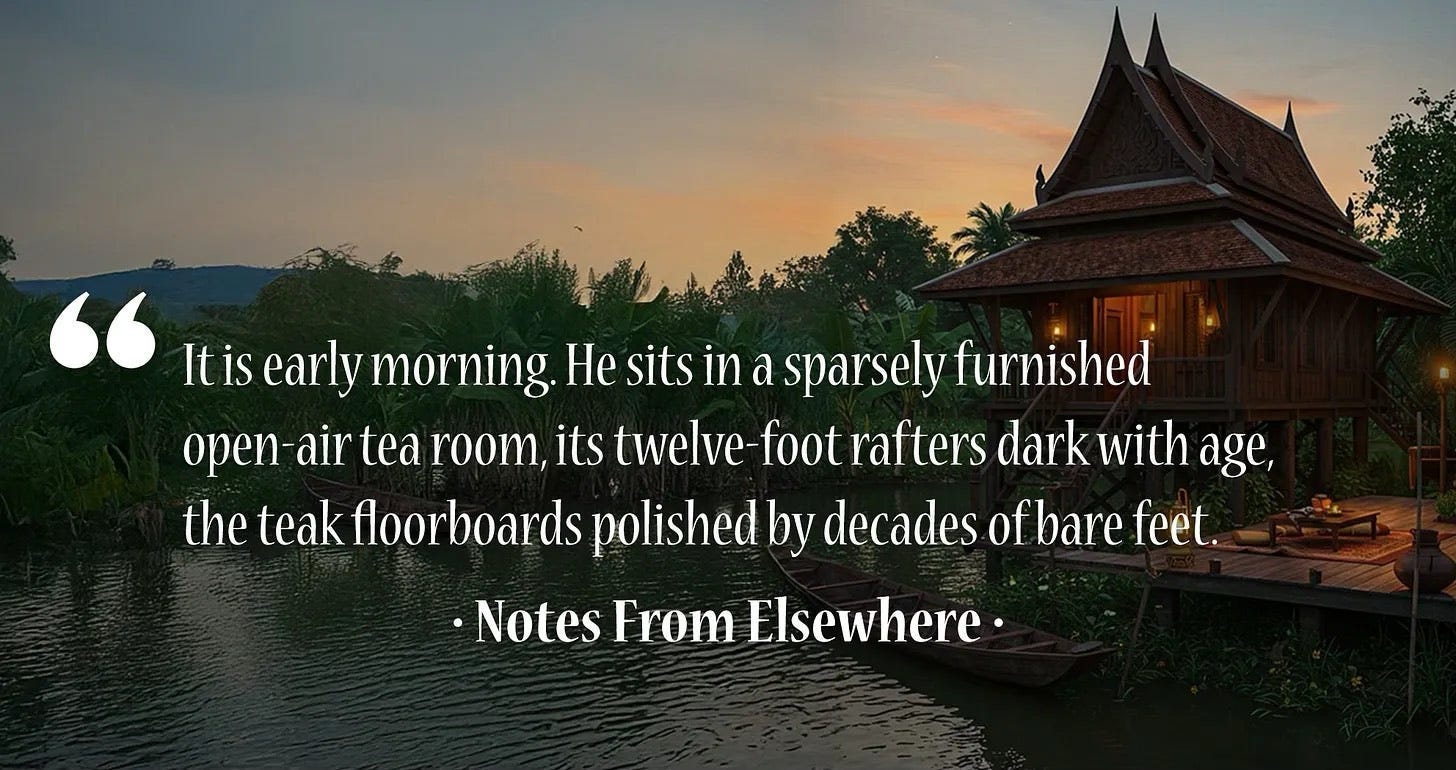
It is early morning. He sits in a sparsely furnished open-air tea room, its twelve-foot rafters dark with age, the teak floorboards polished by decades of bare feet. Along the open face of the room, the storm doors are folded neatly into the doorframe, so cleverly disguised one might forget they exist at all, and so rarely closed they feel more like a precaution from another life than a feature of this one. The room opens directly onto his courtyard garden, a small tropical Eden of glossy leaves and shadowed alcoves, where birds flicker through the foliage, their quick notes falling like reminders of another, simpler chronology. A reflecting pool anchors the scene: a long, stone rectangle in which the water moves with monkish restraint, disturbed only by the slow drift of water-lilies across its surface.
Bourdain is shirtless, lean as ever, wearing only white Thai-silk drawstring trousers. An attendant glides across the sparsely furnished room—an apparition more than a servant—and hands him a bowl of steamed short-grain rice. He lowers himself into a full Asian squat, a posture that seems both remembered and re-learned, and takes a moment to consider the quiet fortune of being here at all. In this stillness, you sense a man who has slipped between the cracks of recorded life and found a strange, gracious corner in which to abide.
—RHS


